Mayors and municipal heads from Varaždin County were briefed on three studies being prepared as a basis for the new spatial plan at a working meeting at the County Palace on Monday. County President Anđelko Stričak presented them and invited local leaders to submit proposals and amendments before the studies are forwarded to the Varaždin County Assembly.
Deputy County President Silvija Zagorec and Krunoslav Lukačić, president of the County Assembly, also attended the meeting. Alongside the studies, the Destination Management Plan for Varaždin County was also presented.
Twenty thousand weekend houses
The study on housing needs and possibilities is being carried out by Ernst & Young Consulting and the Institute for Development and International Relations, with a completion deadline in October. Initial data from HEP (Croatian Electric Utility Company) shows that there are more than 20,000 properties in the county with an annual electricity consumption of less than 500 kilowatt-hours. This suggests they are used as occasional weekend houses. A further 12,000 properties consume less than 100 kilowatt-hours per year.
– We are facing a period in which we need to find a way to encourage owners to put these properties into use – said Mario Sambolec, head of the Spatial Planning and Construction Department.
According to 2021 data, there were 52,020 private households in the county with an average of 3.21 members. No less than 91.7 per cent of residents live in their own or co-owned properties. During 2024, the county recorded a positive migration balance of 5.1 per mille, with a positive trend in 18 local units.
Fragmented plots and tourism plan
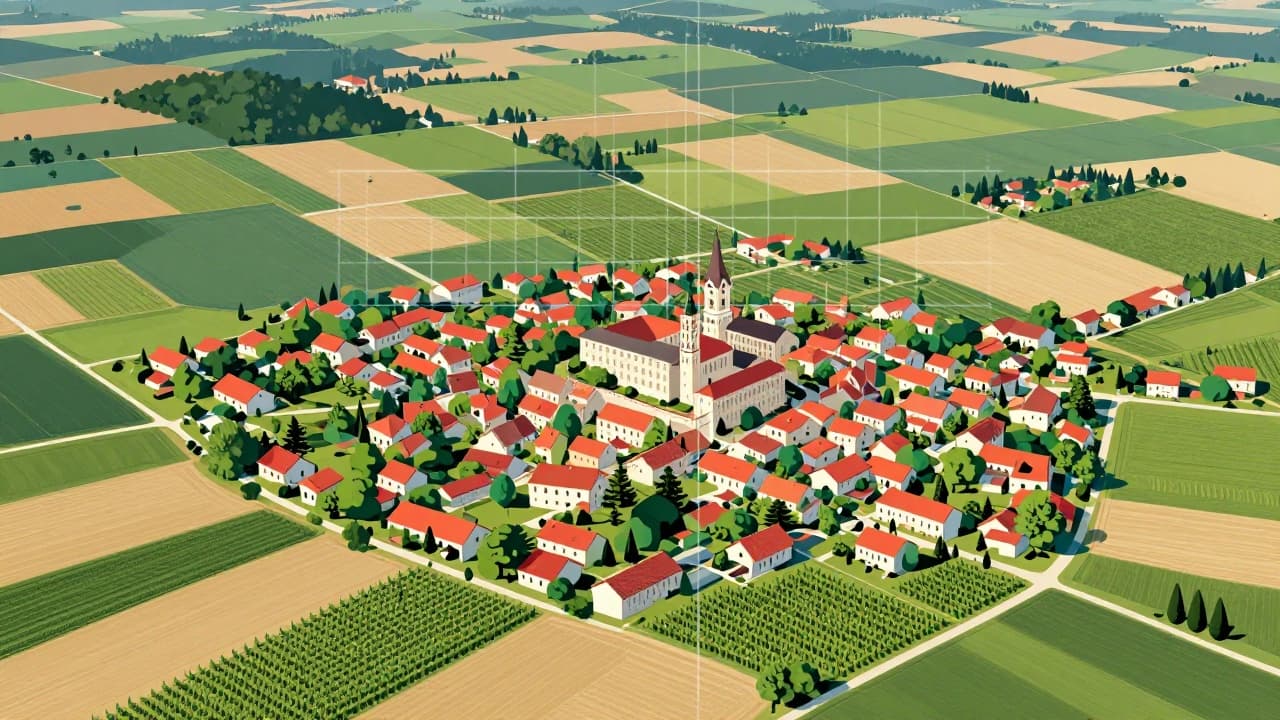
The study on planning categories of agricultural land, being carried out by the company Pre-con, is due for completion in September. The county has 68,329 hectares of agricultural land, of which 45.6 per cent is registered in ARKOD (the Cadastre of Real Estate). The average plot size is just 0.38 hectares, significantly less than the Croatian average of 0.84 hectares. Therefore, land consolidation is recommended as a priority. The most common crop is maize, followed by cereals, vineyards, potatoes and orchards.
The third study deals with the spatial possibilities for renewable energy sources. It was completed at the end of 2025 by the Varaždin County Institute for Spatial Planning.
The Destination Management Plan will soon go out for a 30-day e-consultation. The final version will then be forwarded to the County Assembly, announced Goran Mališ, director of the Varaždin County Tourist Board. Discussions also took place regarding the possible capital injection into the Varaždin County Guarantee Agency. The association Životni zov, which cares for 114 abandoned cats, requested support for the development of a space in Jalžabet. This could see the opening of the county’s first cat shelter there.