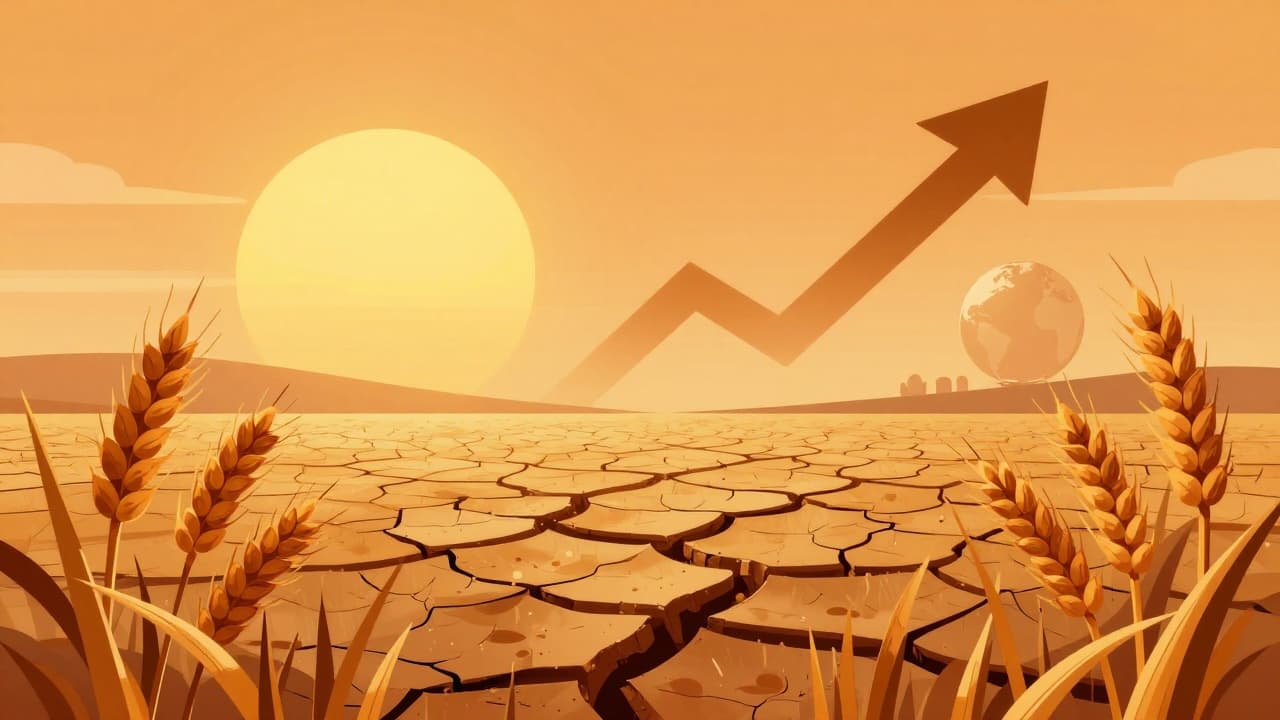
Economists warn that a "super" El Niño, expected in the 2026-2027 period, could trigger a new shock to global food prices, with consequences felt until 2028, Index.hr reports, citing The Guardian.
The warning comes as the war in Iran has already pushed global food prices to their highest level in three years. The US National Oceanic and Atmospheric Administration (NOAA) confirmed last month the intensification of Pacific warming, with the probability of sea surface temperatures exceeding the average by more than two Celsius degrees by the end of the year estimated at 63 per cent.
Goldman Sachs analysts calculated that such a strong El Niño could raise global food commodity prices by 15.8 per cent, with an estimated food price increase in the eurozone of 1.3 per cent. The full effect, due to planting and harvesting cycles and logistical constraints, may not be realised until the second half of 2028.
UniCredit predicts a 14.3 per cent drop in global agricultural production in an extreme scenario, equating to a loss of $342 billion. Price shocks for key commodities could reach between 10 and 50 per cent, while the most exposed crops - rice, palm oil, sugar and coffee - could become 50 to 100 per cent more expensive or more. "Due to El Niño, 'climateflation' is back on the agenda," analysts at the bank note.
Initial effects are already visible: the monsoon season in India has been unusually dry, with some regions recording only 25 per cent of typical rainfall, threatening supplies of wheat, rice and sugarcane, Goldman Sachs notes. Droughts in Southeast Asia could hit palm oil, coffee and cocoa production.
El Niño usually brings an increased risk of drought in southern Africa and northern South America, and flooding in southern Brazil, Argentina, Paraguay and Uruguay. UBS analysts highlight that the phenomenon creates "regional winners and losers", and could hit lower-income countries the hardest. The possibility of a new inflationary shock also concerns central banks, which may keep interest rates at elevated levels as a result.