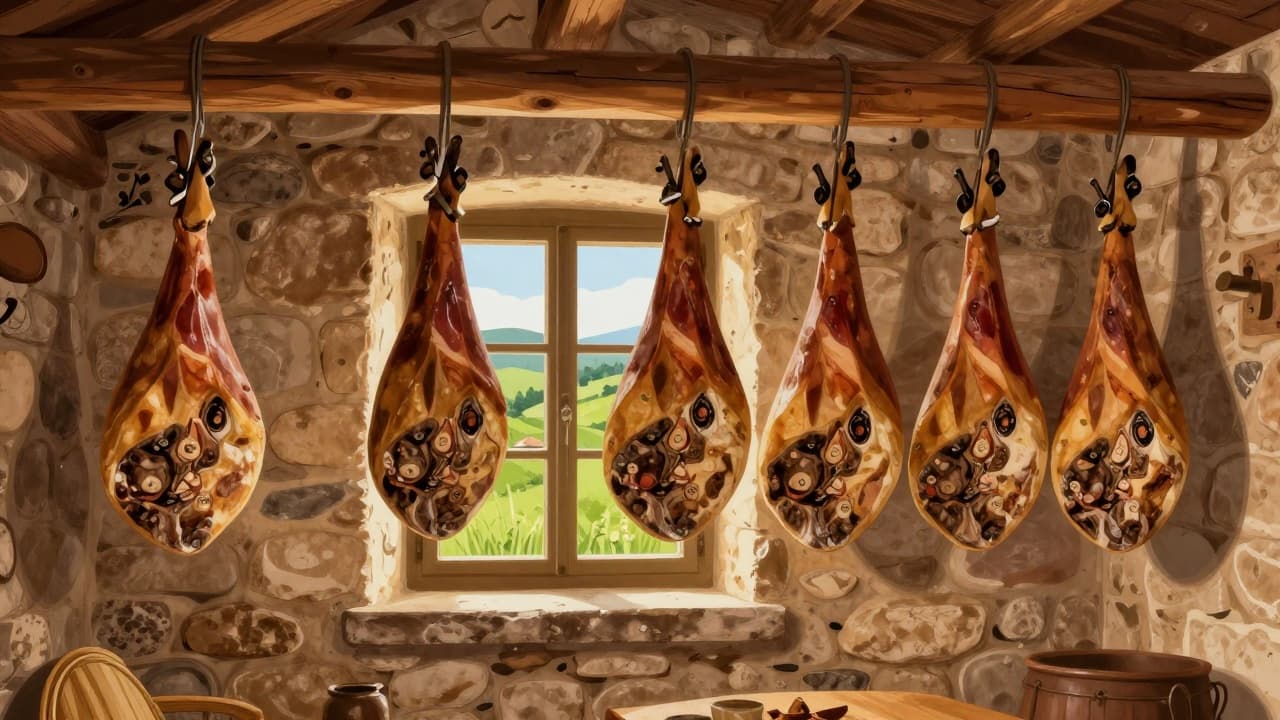
The Istrian Agency for Rural Development (AZRRI), Istria County and the Association of Istrian Prosciutto Producers have launched a pilot project for systematic pig fattening, establishing for the first time in Istria an organised model for producing domestic raw material for Istrian prosciutto and other traditional cured meats, reports Glas Istre.
The project was presented at a press conference at the Buretić family farm (OPG) in Mandići, within Boljunsko Polje. In the first year of implementation, 250 piglets will be fattened on four farms: the Buretić family farm, the Mateo family farm in Selina, the Kalčić family farm in Livade, and the Valturi Prison, in accordance with the specification for the production of Istrian prosciutto with protected designation of origin.
Unlike previous practice, all stages of production are coordinated by AZRRI, from the procurement of piglets and feeding planning to veterinary oversight, transport, slaughter and delivery of pork halves to prosciutto producers. Prosciutto producers declare their raw material requirements in advance and secure part of the funding for implementation, ensuring that fattening farmers know their livestock will be purchased.
Fattening farmers are guaranteed a purchase price of four euros per kilogram of live weight. The pigs will be fattened to approximately 180 kilograms of live weight, with a minimum age of nine months, and slaughter will begin in November this year and continue until the end of February next year.
The technical part of the project is led by Prof. Dr. Krešimir Salajpal from the Faculty of Agriculture at the University of Zagreb, together with AZRRI experts, featuring individual feeding plans for each fattening farmer and continuous oversight by the certification body Biotechnicon from Zagreb.
AZRRI Director Igor Merlić highlighted that the project represents one of the most important development initiatives for Istrian livestock farming in recent years. "With this project, we are laying the foundations for a completely new model of cooperation between breeders, fattening farmers and Istrian prosciutto producers," Merlić stated, adding that the long-term goal is a system that will involve more producers each year and ensure a stable supply of domestic raw material.