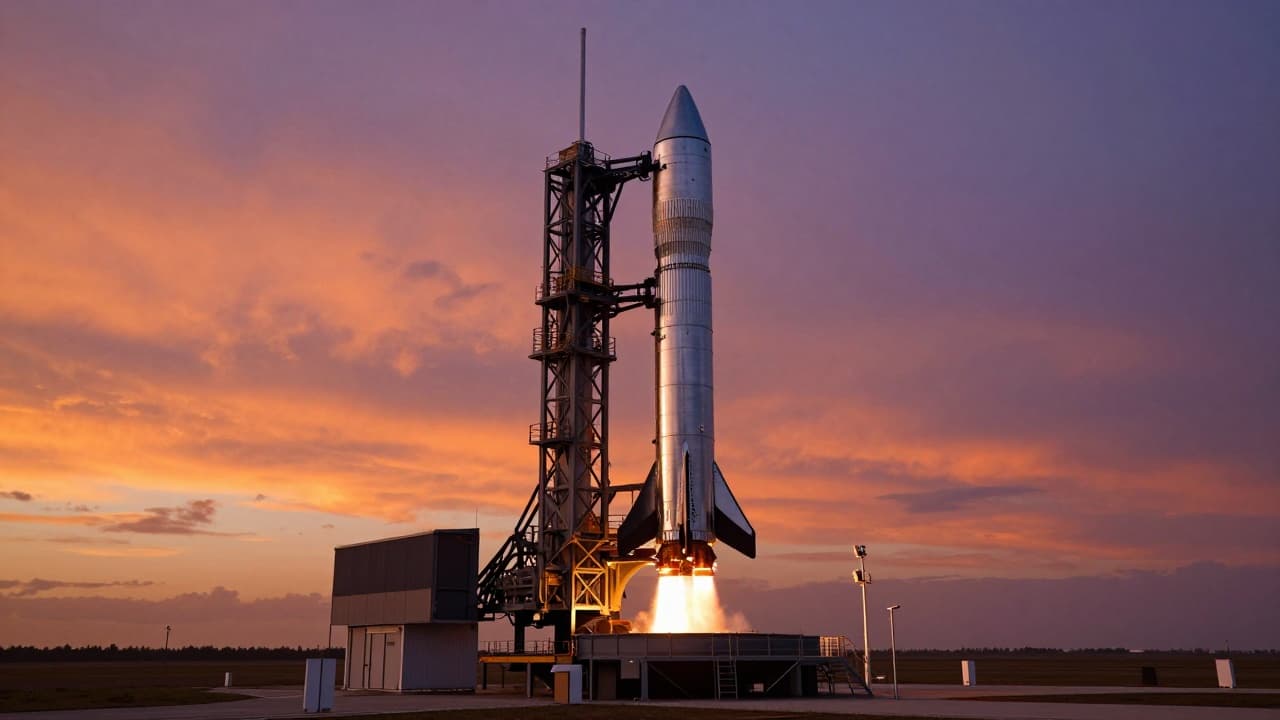
Indian space company Skyroot Aerospace launched the Vikram-1 rocket on Saturday, becoming the first private Indian company to reach orbit, the BBC reports. India thereby became only the third country, after the US and China, whose private company is capable of orbital launches.
The rocket, as tall as a seven-storey building, lifted off at 12:05 local time from the launch base of the Indian Space Research Organisation (ISRO) in Sriharikota in southern India, reaching low Earth orbit at an altitude of approximately 450 kilometres in a 16-minute flight.
The mission, named Aagman, which means arrival in Sanskrit, carried six payloads into orbit, including a robotic arm for removing space debris, an Earth observation camera, and a satellite belonging to a German company. Also flying were two symbolic payloads: a lotus made of laboratory-grown diamonds and a miniature golden rocket with microscopic sculptures of three giants of Indian science, including Vikram Sarabhai, the father of India's space programme, after whom the rocket is named.
Skyroot, which recently became India's first space "unicorn" with an estimated value of $1.1 billion, targets the small satellite market with its rocket, which has a payload capacity of up to 350 kilograms. Co-founder and chief executive Pawan Kumar Chandana compares the service to a taxi: instead of sharing space on large rockets with fixed schedules, customers could book launches tailored to their satellite and desired orbit.
Chandana told the BBC that access to space is currently a bottleneck, as satellite operators often wait months or even years for launch opportunities. The company's model is comparable to that of the American Rocket Lab, which offers lighter launch vehicles.
Saturday's launch is the first of two test flights planned by Skyroot this year, with commercial launches scheduled for next year. The company, founded in 2018 by two former ISRO employees, can produce one rocket per month at its factory in Hyderabad, Chandana said.