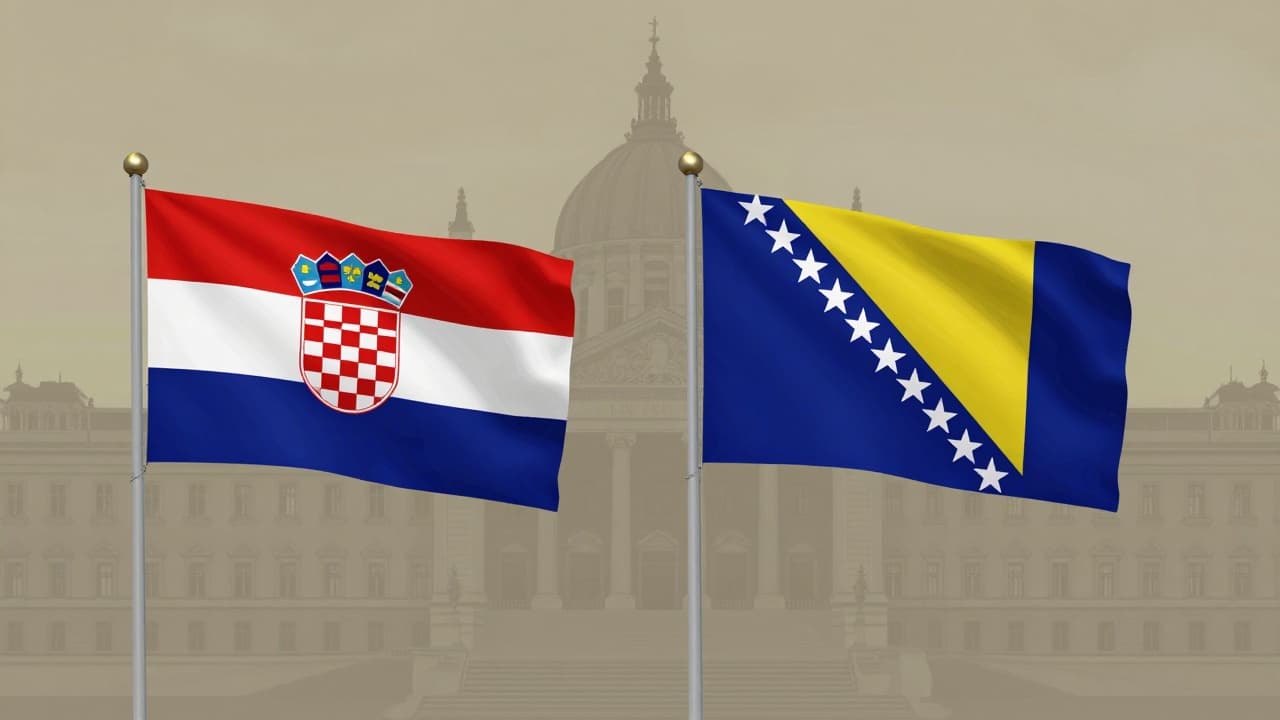
Dragan Covic, Speaker of the House of Peoples of the Parliament of Bosnia and Herzegovina and president of the Croatian Democratic Union of Bosnia and Herzegovina (HDZ BiH), thanked Zagreb on Tuesday for the resolution on the status of Croats in Bosnia and Herzegovina, which the Croatian Parliament adopted last week. He assessed that the document "carries the spirit of Dayton" because the equal status of the Croat people is a constitutional category.
The ruling parliamentary majority passed the resolution at the proposal of the Homeland Movement. In nine points, it calls on the Government to continue supporting the full political equality of Croats in Bosnia and Herzegovina, primarily through reform of the electoral system that would guarantee each constituent people the election of legitimate representatives.
The Bosniak and Croat members of the Presidency of Bosnia and Herzegovina are elected in the Federation of Bosnia and Herzegovina, where Bosniak voters outnumber Croat voters by three and a half times. With votes predominantly from Bosniak voters, Zeljko Komšić was elected Croat member of the Presidency four times, and he is no longer eligible to stand in the general elections on 4 October.
HDZ BiH has nominated Darijana Filipović as its candidate for the Croat member of the Presidency, while the Croatian opposition five-party alliance also has a candidate, and Komšić's Democratic Front is represented by Slaven Kovačević. "I am convinced that this time we will have the opportunity to have our legitimate representatives, which becomes the basis for the long-term stability of Bosnia and Herzegovina," Covic said.
Bosniak politicians are not satisfied with the resolution. Denis Bećirović, President of the Presidency of Bosnia and Herzegovina, assessed that its adoption constitutes interference in the country's internal affairs, contrary to international law, while Foreign Minister Elmedin Konaković stated that Croats in Bosnia and Herzegovina have "more rights than they are entitled to by law" and announced a conference on the matter in Sarajevo on 5 August.
The host of the meeting, Croatian Parliament Speaker Gordan Jandroković, highlighted that Bosnia and Herzegovina is the third country in terms of Croatian investments, and trade between the two countries exceeded four billion euros last year. He singled out the Southern Gas Interconnector as a key joint project, which would connect Bosnia and Herzegovina to the Croatian gas system and the LNG terminal on Krk; Croatia, he said, had secured funds for 74 kilometres of gas pipeline to the border.